
- When purchasing a home always have a complete septic system inspection & evaluation performed by a qualified Licensed Septic System Contractor or the proper local Government Authorities.
- If not properly maintained, an on-site septic system could cost many thousands of dollars to repair or replace. The following provides technical information and tips to help you avoid such an expense.
Septic Systems Information & Maintenance Tips
Septic Tanks
- All on-site septic systems have a septic tank, a large container that is buried underground and is made of concrete, fiberglass or polyethylene. The septic tank protects the absorption ability of the subsoil by:
- Removing solids from liquid. As sewage enters the septic tank, heavy solids settle at the bottom and forms sludge, which reduces the flow of sewage into the tank. While grease and other light solids rise to the surface (scum), both the sludge and scum are retained and break down while the liquid (effluent) is passed along to the drain field for absorption by the soil.
- Providing biological treatment. Bacterial activity breaks down the solids and liquids in anaerobic conditions (without oxygen), which are referred to as “septic,” the name given to the tank.
- Retaining scum and sludge. Scum, the mat of floating solids and grease, and sludge, the solids that build up in the bottom of the tank, are eventually compacted into a fraction of its original volume. Warm geographical regions of the country allow for a more complete breakdown of the scum and sludge than cool regions. Hence, tanks in warm climates tend to not require pumping or cleaning out as frequently as tanks in cold climates.
- Note that it is important to maintain a sufficient volume for solids to accumulate between pumpings and cleanings in order to avoid having the solids enter the drain field and clog the soil.
- Septic tanks should provide at least 24-hour retention time or at least 750 gallons for a one or two-bedroom house; 900 gallons for a three-bedroom house; and 1,000 gallons for a four-bedroom house. 250 gallons should be added for each bedroom exceeding four.
- Kitchen grease is generally detrimental to the septic tank’s operability. Small amounts of kitchen grease can enter the septic tank without damaging the system.
Types of Septic Systems
The following are descriptions of the various types of septic systems, according to the U.S. Environmental Protection Agency.
Conventional Septic System:
- Consists of a settling or septic tank and a soil absorption field. The traditional system accepts both grey water (wastewater from showers, sinks, and laundry) and black water (wastewater from toilets). These systems are typically restricted in that the bottom invert of the absorption field should be at least 2 feet above the seasonally high water table or impermeable layer (separation distance) and the permeation rate of the soil should be between 1 and 60 minutes per inch. Also, to ensure proper operation, the tank should be pumped every 3 to 5 years. Nitrogen removal of these systems is minimal and somewhat dependent on temperature. The most common type of failure of these systems is from clogging of the absorption field, insufficient separation distance to the water table, insufficient permeation capacity of the soil, and overloading of water.
Intermittent Sand Filter:
- Used in conjunction with pre-treatment methods such as septic tanks and soil absorption fields. An intermittent sand filter receives and treats effluent from the septic tank before it is distributed to the leaching field. The sand filter consists of a bed (open or buried) of granular material 24 to 36 inches deep. The material is usually 0.35 to 1.0 mm in diameter. The bed of granular material is underlain with graded gravel and collector drains. These systems have been shown to be effective for nitrogen removal, however, this process is dependent on temperature. Water loading recommendations for intermittent sand filters are typically between 1 and 5 gallons per day/square foot (gpd/ft2) but may be higher, depending on wastewater characteristics. Primary failure of sand filters is due to clogging, and maintenance is recommended to keep the system performing properly, resting the bed, raking the surface layer, or removing the top surface medium and replacing it with clean medium. In general, the filters should be inspected every 3 to 4 months to ensure that they are operating properly.
- Intermittent sand filters are used for small commercial and institutional developments as well as individual homes. The size of the facility is limited by land availability. The filters should be buried in the ground, but they may be constructed above ground in areas of shallow bedrock or high water tables. Covered filters are required in areas with extended periods of subfreezing weather. Excessive, long-term rainfall and runoff may be detrimental to filter performance, requiring measures to divert water away from the system (USEPA, 1980).
Recirculating Sand Filter:
- A modified intermittent sand filter in which effluent from the filter is recirculated through the septic tank and/or the sand filter before it is discharged to the soil absorption field. The addition of the recirculation loop in the system may enhance removal effectiveness and allow media size to be increased to as much as 1.5 mm in diameter.
Buried or recirculating sand filters:
- Buried or recirculating sand filters can achieve a very high level of treatment of septic tank effluent before discharge to surface water or soil. Dosed recycling between sand filter and septic tank or similar devices can result in significant levels of nitrification/dentrification, equivalent to between 50 and 75 percent of overall nitrogen removal, depending on the recycling ratio. Regular buried or recirculating sand filters may require as much as 1 square foot of filter per gallon of septic tank effluent.
Mound Systems:
- An alternative to conventional OSDS and are used on sites where insufficient separation distance or permeation conditions exist. Mound systems are typically designed so the effluent from the septic tank is routed to a dosing tank and then pumped to a soil absorption field that is located in elevated sand fill above the natural soil surface. There is evidence suggesting that pressure dosing provides more uniform distribution of effluent throughout the absorption field and may result in better performance. A major limitation to the use of mounds is slope.
- Where adequate area is available for subsurface effluent discharge, and permanent or seasonal high ground water is at least 2 feet below the surface, the elevated sand mound may be used in coastal areas. This system can treat septic tank effluent to a level that usually approaches primary drinking water standards for BOD5, suspended solids, and pathogens by the time the effluent plume passes the property line for single-family dwellings. A mound system will not normally produce significant reductions in levels of total nitrogen discharged, but should achieve high levels of nitrification.
Evapotranspiration (ET) and Evapotranspiration / Absorption (ETA) Systems:
- Combine the process of evaporation from the surface of a bed and transpiration from plants to dispose of wastewater. The wastewater would require some form of pretreatment such as a septic tank. An ET bed usually consists of a liner, drain field tile, and gravel and sand layers. ET and ETA systems are useful where soils are unsuitable for subsurface disposal, where the climate is favorable for evaporation, and where groundwater protection is essential. In both types of systems, distribution piping is laid in gravel, overlain by sand, and planted with suitable vegetation. Plants can transpire up to 10 times the amount of water evaporated during the daytime. For an ET system to be effective, evaporation should be equal to or greater than the total water input to the system because it requires an impermeable seal around the system. In the United States, this limits use of ET systems to the southwest. The size of the system depends on the quantity of effluent inflow, precipitation, local ET rate, and soil permeability (Otis, undated).
Aerobic Treatment Units:
- Can be employed on-site. These systems require regular supervision and maintenance to be effective. An aerobic bacteriological farm can digest 90% to 95% of the solid wastes that are deposited into the septic tank. Typically, oxygen is supplied to a septic system when there is a problem with pumping frequency or the overall effectiveness of the system. The typical design of these systems is such that a small compressor is located near the sewer line as it exits the house, which provides oxygen for the tank.
Disinfection Systems:
- Chlorination, ozonation, and ultraviolet disinfection are the most common methods of disinfection in the U.S.Chlorine, the most widely used disinfectant in municipal wastewater, destroys organisms by oxidizing cellular material. Chlorine can be applied as chlorine gas, hypochlorite solutions, and other chlorine compounds in solid or liquid form.
- Ozone, an unstable gas generated by an electrical discharge through dry air or pure oxygen, is another oxidizing agent. Ultraviolet radiation, generated by an electrical discharge through mercury vapor, is absorbed into the genetic material of microorganisms and hinders their ability to reproduce.
Care of Septic Systems
To maximize the useful life of a septic system and prevent premature failure, all systems require proper care and periodic maintenance.
- Inspect your septic tank once every year and pump as necessary. Solids will eventually fill the tank and pass them into the drain field, mound or sand filter, which can lead to expensive repairs.
- Avoid flushing harmful material into the septic tank. Never put grease, any kind of paper (other than toilet paper), cigarettes, coffee grounds, sanitary napkins, solvents, oils, paint, caustic chemicals or pesticides into the tank.
- Avoid the use of any type of chemical or biological septic tank additive. Additives do not improve the performance in a septic tank. They are not a substitute for routine pumping, and some can be harmful to the system or the environment.
- Use water wisely. Keep the amount of wastewater entering the septic system well below the “daily designed flow,” which is the maximum number of gallons the system is designed to handle per day. For a three-bedroom house, the daily designed flow in gallons per day (gpd) is 450; for a four-bedroom house, it’s 480 gpd. A septic system cannot be run at its peak capacity for very long without problems developing. Using more water than the system is designed to manage is one of the leading causes of premature septic system failure. To reduce the risk of water overloads, use “low flow” fixtures on faucets, showerheads, and toilets (many newer homes come with low flow fixtures). Front loading washing machines use considerably less water than top load models. Do laundry throughout the week, rather than all on a single day. Promptly repair all leaky faucets and toilets.
- Limit garbage disposal use. A garbage disposal can lead to a significant increase in solid build-up and waste strength problems in a septic system. Therefore, they are not recommended for use with a septic system. If your house already has one, limit the amount that it is used.
- Don’t construct patios, carports, decks or use landscaping plastic over the drain field or septic tank. The system should be kept accessible for proper maintenance and repair and the drain fields need oxygen in order to work properly. When soil is compacted, the drain field paved over or covered, oxygen cannot get into the soil.
- Keep all vehicles off the septic tank and drain field areas. Vehicular traffic is a major cause of damage to septic systems. Septic tanks are typically not designed for vehicular traffic and may crack or collapse as a result. Drain field pipes can be easily crushed by cars being driven over them. Vehicles also compact the surrounding soil, which prevents proper drainage.
- Direct water from roof drains and surface drainage away from the drain field and septic tank. Additional water from these sources may overload the drain field. Surface and ground water that enters the septic or pump tank can easily fail a system even though household water use is well within the design capacity of the system.
- Don’t dispose of water from hot tubs into the septic tank. Large volumes of water and residual chlorine can be extremely harmful to your septic system. Check with local jurisdictions for proper disposal of water from hot tubs.
- Keep a detailed record of all maintenance activities.
- Be aware of the location of all septic system components. A septic system as-built is the best source of this information. Know where the septic tank, pump tank, drain field and reserve areas are located. Protect these areas from impacts of any driveway, out building, patio, deck, swimming pool, sports court or landscaping projects.
- Don’t plant trees and shrubs over septic tanks or drain fields. The water-seeking roots of these plants can damage your home septic system. Grass or shallow-rooted plants tend to be the best cover for septic systems.
How will I know when to pump the tank?
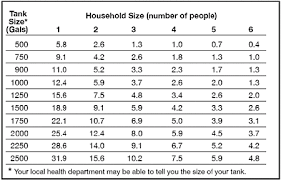
- The frequency with which you will need to pump depends on three variables, the size of your tank, the number of people in the household contributing to the volume of your wastewater, and the volume of solids in your wastewater. If you are unsure about when to have the tank pumped, observe the yearly rate of solids accumulation in the septic tank. The solids should be pumped out of the septic tank by a licensed septic contractor. Most county health departments recommend that the accumulated solids in the bottom of the septic tank be pumped out every three to five years although if the tank is large and the household is small a tank can function longer without requiring pumping (see Table 1).
Table 1. Estimated Septic Tank Pumping Frequencies in Years:
- For example, when waste backs up in your backyard, the system has obviously failed. If significant amounts of biological or nutrient contaminants reach your well or surface waters, the system is also failing, even though it may appear to be working just fine.
- Most septic systems are designed to have a lifetime of 20 to 30 years, under the best conditions. However, many septic systems will fail before this time. Eventually, the soil around the absorption field becomes clogged with organic material, making the system unusable.
- Many other factors can cause the system to fail well before the end of its “design” lifetime. Pipes blocked by roots, soils saturated by storm water, crushed tile, improper location, poor original design or poor installation can all lead to major problems.
- But by far the most common reason for early failure is improper maintenance by homeowners. When a system is poorly maintained and not pumped out on a regular basis, sludge (solid material) builds up inside the septic tank, then flows into the absorption field, clogging it beyond repair.
How to know if your system is failing
These symptoms tell you that you have a serious problem:
- Sewage backup in your drains or toilets. This is often a black liquid with a disagreeable odor.
- Slow flushing of your toilets. Many of the drains in your house will drain much slower than usual, despite the use of plungers or drain cleaning products.
- Surface flow of wastewater. Sometimes you will notice liquid seeping along the surface of the ground near your septic system. It may or may not have an odor associated with it.
- Lush green grass over the absorption field, even during dry weather. Often, this indicates that an excessive amount of liquid from your system is moving up through the soil, instead of downward, as it should. While some upward movement of liquid from the absorption field is good, too much could indicate major problems.
- The presence of nitrates or bacteria in your drinking water well. This indicates that liquid from the system may be flowing into the well through the ground or over the surface. Water tests available from your local health department will indicate if you have this problem.
- Buildup of aquatic weeds or algae in lakes or ponds adjacent to your home. This may indicate that nutrient-rich septic system waste is leaching into the surface water. This may lead to both inconvenience and possible health problems.
- Unpleasant odors around your house. Often, an improperly vented plumbing system or a failing septic system causes a buildup of disagreeable odors around the house.
- A number of products are marketed with the pledge that they can keep septic systems operating smoothly, correct system upsets, or do away with the need to pump the tank periodically. Chemical additives are strong acids or alkalis, or organic solvents. Biological additives are cultures of harmless bacteria, plus waste-digesting enzymes. These sometimes contain yeast cultures.
- Although some manufacturers of additives have test data showing how their products perform, there has been almost no independent testing of these products in full-sized septic systems. The information that exists does not show improved long-term performance in systems where additives have been used. If a system is not being misused by the homeowner, these products are unlikely to pose a benefit. The amount of material added with each dose of product is very small compared to the biological material already present and working in the tank.
- Occasionally a system suffers an upset, when the septic tank bacteria are harmed or destroyed. This can happen if the home is vacant for a long period and the tank receives no fresh wastewater, or if strong cleaning agents are flushed down the drain. After a few days of normal use, the biological system in the tank will re-establish itself. In this situation the biological additives may help speed the recovery of the septic tank.
- Every septic tank needs to be pumped periodically, because all wastewater contains inert matter that cannot be degraded in the tank. No additive can do away with this need.
Could an additive harm my system?
- The biological additives are unlikely to be harmful. The chemical additives could definitely harm your system. These products have the potential to sterilize your system temporarily. The resulting passage of raw sewage into the drain field will hasten its failure. The acid and alkali products can corrode the plumbing and the tank. The organic solvents pass through the system unchanged. They can then infiltrate into the groundwater, creating a chemical plume that endangers nearby wells.
Septic System Safety Warnings for Home Owners and Home Buyers:
- Look for signs of collapse, hazards include depressions in the soil anywhere on or around the property. If suspect areas are present it is recommended to contact a qualified Septic System Contractor for further evaluation.
- All Septic System repairs should be performed only by qualified Septic System Contractors. If repairs or work, such as agitating, pumping out or aerating is performed by “unskilled workers” the result could be not only dangerous but very costly to repair.
Note: The Information contained within this website is for informational purposes only. Kevin M. Leonard & The Ohio Home Inspections Company always recommends that a qualified expert be consulted in the area of concern.